
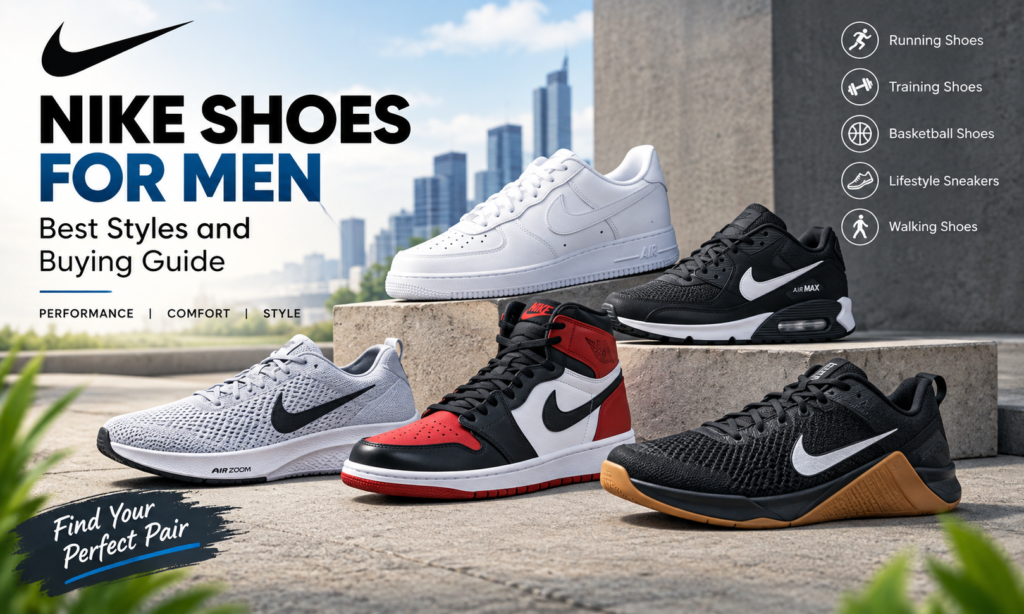

Nike shoes for men are popular with people seeking athletic performance, everyday comfort, and modern footwear styles. From running shoes and basketball sneakers to casual trainers and classic lifestyle designs, Nike offers options for different activities, personal preferences, and budgets.
Choosing the right pair is about more than a recognizable logo or an attractive colorway. The best Nike Shoes for Men should match how you plan to use them, fit comfortably, provide appropriate support, and suit your everyday routine.
Whether you need footwear for the gym, running, walking, sports, or casual outfits, understanding the main Nike shoe categories can make shopping easier. This guide explores popular styles, key features, sizing tips, outfit ideas, and practical advice to help you find the right pair.
Why Nike Shoes for Men Remain Popular
Nike has developed a strong presence in athletic footwear through sports-focused designs, recognizable silhouettes, and a broad range of products. Its collections serve professional athletes, recreational runners, gym-goers, sneaker enthusiasts, and anyone who wants comfortable everyday shoes.
A Wide Variety of Styles
One major advantage of shopping for Nike footwear is the wide variety of designs available. Buyers can choose lightweight running shoes, supportive basketball sneakers, training shoes, or lifestyle models inspired by classic athletic footwear.
The range also includes minimalist designs, bold statement sneakers, neutral everyday options, and colorful releases. This variety makes it easier to find shoes that complement different wardrobes and activities.
Performance-Inspired Technology
Nike uses different cushioning systems, foam materials, rubber outsoles, and upper constructions across its product lines. Some models prioritize responsiveness and reduced weight, while others focus on stability, traction, or comfort during everyday movement.
However, technologies vary by model. A feature in a premium running shoe shouldn’t automatically be expected in an entry-level trainer or lifestyle sneaker.
Everyday Versatility
Many Nike sneakers can be worn beyond their intended athletic settings. Classic lifestyle shoes, for example, work well with jeans, joggers, shorts, and casual streetwear.
This versatility is particularly useful for buyers who want footwear that fits into several parts of their daily routine. However, casual sneakers aren’t necessarily a suitable substitute for specialized running or court shoes.
Popular Types of Nike Shoes for Men
Understanding the differences between shoe categories is an important first step when comparing men’s Nike footwear.
1. Nike Running Shoes
Running shoes are designed to support repetitive forward movement. Depending on the model, they may feature cushioned midsoles, breathable uppers, flexible construction, and outsoles designed for road or trail surfaces.
Nike running collections include options for everyday training, longer distances, speed sessions, and competitive running. Some shoes emphasize soft cushioning, while others offer a firmer and more responsive ride.
Consider running shoes if you regularly jog, train for races, or walk long distances. Choose a model based on your usual pace, running surface, comfort preferences, and training needs rather than appearance alone.

2. Nike Basketball Shoes
Basketball shoes are designed for the demands of court sports, including jumping, landing, quick changes of direction, and lateral movement.
Depending on the model, they may feature supportive uppers, secure lacing systems, cushioned midsoles, and traction patterns intended for indoor courts.
Some basketball sneakers are also popular as streetwear because of their distinctive shapes and connections to professional basketball. However, a shoe that looks attractive as casual footwear may feel heavier or less comfortable than a dedicated walking shoe.
3. Nike Training Shoes
Training shoes are intended for gym workouts and varied movements. They can provide a stable platform for strength exercises, along with enough flexibility for selected conditioning activities.
Features differ considerably across the range. Some models prioritize stability for lifting, while others suit circuits, general fitness sessions, or short cardio workouts.
If your routine includes heavy weightlifting, look for a stable base and a secure fit. If you combine strength training with dynamic exercises, consider how well the shoe handles both.
4. Nike Lifestyle Sneakers
Lifestyle sneakers are designed primarily for casual wear rather than specialized athletic performance. Classic Nike silhouettes remain popular because they can complement a variety of outfits without requiring much styling effort.
Options such as the Air Force 1, Air Max family, Dunk, and other heritage-inspired designs offer different appearances and proportions.
Lifestyle models suit everyday outings, social gatherings, shopping, and casual settings. Their comfort varies, so consider the shoe’s weight, cushioning, upper materials, and fit before buying.
5. Nike Walking Shoes
People who spend long periods on their feet may prefer shoes with comfortable cushioning, a secure fit, and enough flexibility.
Some Nike running shoes can also work well for walking, depending on their construction and the wearer’s preferences. Certain lifestyle sneakers are comfortable for short outings but may feel heavy or restrictive on longer walks.
If walking is your main activity, prioritize comfort over fashion trends. Try the shoes on and assess how they feel during sustained movement whenever possible.
Popular Nike Shoe Models for Men
Nike has produced numerous recognizable models. The following examples illustrate different styles and intended uses, although availability, specifications, and prices vary by release and market.
Nike Air Force 1
The Air Force 1 is a classic sneaker known for its relatively substantial shape and clean, versatile design. White and black versions pair easily with casual clothing.
It pairs well with straight-leg jeans, relaxed trousers, shorts, and simple streetwear outfits. Its lifestyle-focused design makes it a strong option for people who prioritize appearance and everyday versatility.
Nike Air Max
The Air Max family is known for visible Air cushioning in select models. Different versions have distinct silhouettes, cushioning arrangements, and upper materials.
Some designs feature a sporty appearance, while others suit everyday casual outfits. Buyers should compare individual models because the Air Max name covers a broad range rather than one uniform shoe design.
Nike Dunk
Nike Dunk sneakers are known for their basketball-inspired heritage and color-blocked designs. People often wear them as lifestyle footwear, and they come in various colorways and editions.
Dunks pair well with jeans, cargo trousers, shorts, and streetwear. Their suitability for long periods of walking depends on the particular model and individual comfort preferences.
Nike Pegasus
Nike Shoes for Men: The Pegasus line is associated with everyday running and training. Different generations have different specifications, so check cushioning, weight, fit, and materials for the exact version you’re considering.
It can be an option for runners who want a shoe for regular training rather than a specialized racing model.
Nike Metcon
The Metcon family is designed around fitness training, with selected models emphasizing stability for strength work and support during gym exercises.
It may suit people whose workouts include resistance training and structured fitness sessions. Buyers who focus primarily on long-distance running should generally compare dedicated running shoes instead.
Key Features to Consider Before Buying
Not every Nike shoe offers the same experience. Evaluating a few key characteristics can help you choose with confidence.
Cushioning and Comfort
Cushioning affects how a shoe feels underfoot. Softer cushioning may appeal to people who prefer a more forgiving ride, while firmer platforms can feel more controlled during certain activities.
There is no single cushioning level that works best for everyone. Body weight, activity type, personal preference, and how long you wear the shoes can all affect comfort.
Fit and Sizing
A good fit is essential for both comfort and performance. Your heel should feel secure, your midfoot should not feel excessively compressed, and your toes should have enough room to move naturally.
Nike sizing can vary by model and category. Don’t assume every pair will fit the same just because the brand is familiar.
Try shoes on later in the day if possible, when feet may be slightly larger, and wear the socks you expect to use with them. For running, allow appropriate space in front of the toes without letting the foot slide around inside the shoe.
Upper Materials and Breathability
Shoe uppers may use mesh, engineered textiles, leather, synthetic materials, or combinations of these. Mesh and lightweight textiles often support airflow, while leather and other denser materials can create a different appearance and feel.
Your environment matters, too. Breathability may be especially valuable in warm weather, while some buyers may prefer more substantial materials for appearance or durability.
Traction and Outsole Design
Nike Shoes for Men: The outsole influences grip and how the shoe interacts with different surfaces. Running shoes, basketball shoes, trainers, and casual sneakers can have substantially different tread patterns.
Consider whether you will primarily use your shoes on roads, gym floors, indoor courts, sidewalks, or trails. A shoe designed for one surface may not provide the same grip or performance on another.
Weight and Stability
Lightweight shoes may feel less cumbersome during running or extended activity. More structured designs can offer a different balance of support and stability.
Your intended activity should determine which qualities matter most. For example, a stable training shoe and a lightweight racing shoe prioritize different things.
How to Choose the Best Nike Shoes for Men
Nike Shoes for Men: The best pair depends on your routine, budget, and comfort requirements. Follow these practical steps before you buy.
Step 1: Identify Your Main Activity
Start by deciding whether you need shoes for running, walking, basketball, gym workouts, or everyday wear. This helps narrow the selection to models designed for your primary purpose.
If you need one pair for several activities, identify the activity you perform most often and choose accordingly.
Step 2: Set a Realistic Budget
Nike footwear ranges from relatively accessible models to premium releases and limited-edition sneakers. Prices differ by country, retailer, model, and availability.
Instead of paying more just for a recognizable silhouette, compare the features you will actually use. Reputable retailers can sometimes offer good value on previous-season models.
Step 3: Compare the Exact Models
Nike Shoes for Men: Look at the product specifications for each shoe you are considering. Compare cushioning, materials, weight, intended use, outsole design, and available sizing.
Two Nike shoes can look similar but feel very different when you wear them. The specific model and version matter more than the brand name alone.
Step 4: Prioritize Fit Over Appearance
A fashionable shoe is unlikely to be satisfying if it pinches your toes, slips at the heel, or creates uncomfortable pressure points.
If possible, try on both shoes and walk around before purchasing. If you shop online, check the retailer’s sizing guidance and return policy.
Step 5: Buy From a Reliable Seller
Purchase from Nike or a reputable authorized retailer whenever possible. Be cautious of listings that advertise unusually low prices for popular models, particularly when product photographs, packaging, seller details, or descriptions seem inconsistent.
Inspect the retailer’s return policy and product information before paying. A trustworthy buying experience matters as much as choosing the right style.
How to Style Nike Shoes for Men
Nike sneakers can work with a wide range of casual outfits. The easiest combinations depend on the shoe’s shape, color, and intended use.
With Jeans
White, black, and neutral sneakers pair naturally with blue, black, or grey jeans. A simple T-shirt or casual shirt keeps the outfit balanced.
Chunkier sneakers often work well with relaxed or straight-leg denim, while slimmer designs can suit more streamlined outfits.
With Joggers
Running-inspired and lifestyle sneakers can complement joggers for a relaxed, everyday look. Matching the overall proportions of the trousers and shoes helps the outfit look intentional.
Neutral colors are easy to coordinate, while brighter shoes can provide a focal point.
With Shorts
Low-top sneakers and lightweight athletic shoes work well with casual shorts. Choose running shoes for workouts and sports-focused activities, or lifestyle sneakers for casual outings.
Breathable socks and comfortable clothing can make these combinations more practical in warm weather.
With Smart-Casual Clothing
Some understated Nike lifestyle sneakers pair well with casual trousers and a simple polo or button-down shirt. Clean, minimal designs generally work more easily in these settings than heavily decorated athletic models.
Sneaker suitability for smart-casual occasions depends on the workplace, event, and dress code.
Are Nike Shoes Good for Everyday Wear?
Many Nike models suit everyday wear, but comfort depends on the individual shoe and the person wearing it.
Lifestyle sneakers may be convenient for casual outings, while selected running shoes can feel comfortable during longer walks. Shoes with specialized basketball or training features may be less practical for people who primarily need lightweight everyday footwear.
Consider how many hours you will wear the shoes, the surfaces you walk on, and whether you need additional room or support. If you have persistent foot pain or specific footwear requirements, consult an appropriate healthcare professional rather than relying on a general shoe recommendation.
How to Care for Nike Shoes
Proper care can help keep your sneakers looking better and may extend their useful life.
- Remove surface dirt regularly: Use a soft brush or cloth to clear away loose dust and debris.
- Clean gently: Follow the care instructions for the shoe’s materials and use a suitable cleaning method.
- Avoid excessive heat: Let wet shoes air-dry naturally instead of placing them against a heater.
- Rotate footwear: If you wear sneakers frequently, alternate between pairs so they have time to dry between uses.
- Store them properly: Keep shoes in a dry, ventilated place away from prolonged direct sunlight.
- Replace worn athletic shoes: If cushioning, traction, or structural integrity has deteriorated, consider replacing them, especially for sports and running.
Don’t assume every material cleans the same way. Leather, suede, mesh, and specialized synthetic fabrics may require different care.
Nike Shoes for Men: What to Know Before Shopping Online
Nike Shoes for Men: Online shopping makes it easier to compare styles and availability, but buyers should pay attention to product details.
Check the full model name, colorway, size options, and product description. Make sure the photographs match the actual product being sold, rather than relying only on a broad collection name.
Read return and exchange conditions before placing an order. This is particularly important if you are unfamiliar with the model’s fit or purchasing footwear from an overseas seller.
Availability and prices may vary significantly by market. If a particular shoe is unavailable locally, compare the final cost, delivery terms, applicable import charges, and return arrangements before ordering from another country.
Finally, remember that popularity does not guarantee suitability. The right shoe matches your needs, feels comfortable, and offers the features you need for your intended activity.
C. Conclusion
Nike shoes for men offer a wide selection of athletic footwear and casual sneakers for different lifestyles. From running shoes and gym trainers to basketball footwear and classic lifestyle designs, the brand offers options for different needs and preferences.
The best pair depends on your main activity, comfort needs, budget, preferred style, and fit. Consider running shoes for regular runs, training shoes for gym workouts, and lifestyle sneakers for everyday outfits.
Before you buy, compare models, check sizing carefully, and buy from a reliable seller. By balancing comfort, function, and style, you can find Nike shoes that fit naturally into your daily routine.
May you also like: Boden Clothing
D. Frequently Asked Questions
1. Which Nike shoes are best for men?
The best model depends on what you need. Consider the Pegasus line for everyday running, the Metcon family for gym training, and the Air Force 1 or Air Max collections for casual wear.
2. Are Nike shoes comfortable for walking?
Many Nike models can be comfortable for walking. Look for good cushioning, a secure fit, enough toe room, and a weight that feels comfortable for extended wear.
3. What are the most popular Nike shoes for men?
Popular options include the Air Force 1, Air Max, Dunk, Pegasus, and Metcon families. Their popularity reflects different uses, from casual fashion to running and gym training.
4. How should Nike shoes fit?
Nike shoes should feel secure around the heel and midfoot without squeezing your feet. Your toes should have enough room to move, and the shoe should not create painful pressure points.
5. Can men wear Nike running shoes casually?
Yes. Many Nike running shoes work well with joggers, shorts, jeans, and other casual clothing. Their sporty appearance makes them suitable for everyday outfits, although styling depends on the model.
6. How can I avoid fake Nike shoes?
Buy from Nike or reputable authorized retailers, verify the seller’s information, compare product details, and watch out for unusually low prices. No single visual check guarantees authenticity.
7. How long do Nike shoes last?
Their lifespan depends on the model, frequency of use, activity, surfaces, and care. Athletic shoes may need replacing when their cushioning, traction, or structure deteriorates, even if the exterior still looks acceptable.


Pingback: Sonya Nicole Hamlin: Biography, Career, Marriage, and Life Today - trendingscoop.co.uk