
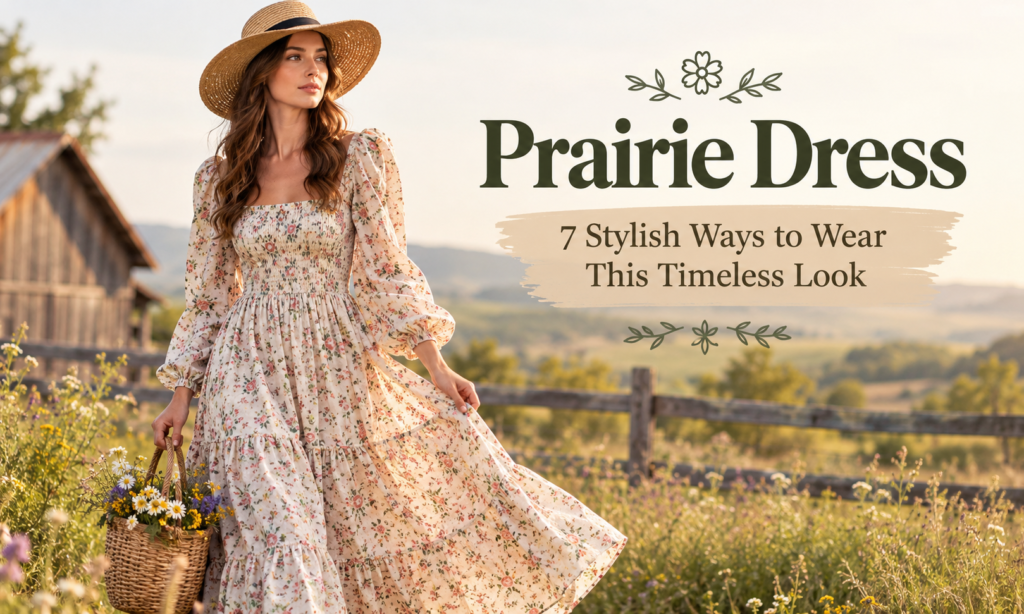

A prairie dress is a timeless fashion staple inspired by rural American clothing, vintage femininity, and traditional country style. Known for its flowing silhouette, delicate floral prints, high necklines, puff sleeves, and romantic details, this dress has evolved from practical historical clothing into a versatile piece in modern women’s fashion.
Today, prairie dresses appear in casual streetwear, cottagecore outfits, bohemian wardrobes, wedding guest looks, and contemporary Western fashion. Some designs feature simple cotton fabrics and subtle patterns, while others incorporate lace, ruffles, embroidery, and dramatic sleeves for a more elegant appearance.
Whether you prefer a vintage-inspired outfit or a modern interpretation, understanding the different styles, fabrics, and ways to wear a prairie dress can help you choose a design that suits your personal taste.
What Is a Prairie Dress?
A prairie dress is a traditionally inspired women’s dress characterized by a modest silhouette, soft fabrics, decorative details, and a romantic country aesthetic. It often features a fitted or gently shaped bodice, a full skirt, long sleeves, and a high or rounded neckline.
Many prairie dresses include small floral prints, gathered fabric, lace trim, ruffled hems, or button-front closures. However, contemporary designs can be simpler, with clean lines and minimal decoration.
The style draws inspiration from the clothing associated with rural communities in the American West and Midwest, particularly during the nineteenth and early twentieth centuries. Modern fashion designers have adapted these historical influences into dresses that work for everyday wear, special occasions, and seasonal outfits.
A prairie dress is not defined by one exact pattern or cut. Instead, it is recognized through a combination of vintage-inspired details, flowing shapes, and a soft, feminine appearance.
The History and Evolution of Prairie Dresses
Understanding the history of prairie dresses helps explain why their appeal continues across different fashion generations.
Early Practical Clothing
During the nineteenth century, women’s clothing in rural America was influenced by practical needs, available materials, social expectations, and changing fashions. Dresses commonly featured long skirts, covered necklines, and sleeves that offered protection from the weather.
Cotton, wool, and other accessible fabrics were used to make everyday garments. Depending on the household and occasion, dresses could be decorated with small prints, stitching, or carefully added trims.
The historical clothing that inspires today’s prairie dress was not one uniform style. Designs varied according to the period, location, occupation, and economic circumstances of the wearer.
The Influence of Vintage Fashion
During the twentieth century, designers and fashion enthusiasts repeatedly revisited romantic historical clothing. Long skirts, floral patterns, lace collars, and gathered sleeves became associated with vintage-inspired fashion.
The prairie look gained broader cultural recognition through American Western imagery and television, including period dramas that presented rural life through recognizable clothing styles.
These interpretations helped turn the prairie dress into a distinct fashion reference rather than simply a practical garment from the past.
The Modern Prairie Dress Revival
In recent years, prairie-inspired dresses have found a place in cottagecore, bohemian, romantic, and contemporary Western wardrobes. Social media and online fashion retailers have also made the style more accessible to people looking for vintage-inspired clothing.
Modern prairie dresses may include shorter hemlines, square necklines, contemporary prints, lightweight fabrics, and updated proportions. Some designs emphasize traditional details, while others borrow only the flowing silhouette or floral aesthetic.
This flexibility allows the prairie dress to feel nostalgic without requiring a completely vintage outfit.
Key Features of a Prairie Dress


Although prairie dresses come in many variations, several design elements are commonly associated with the style.
1. High and Modest Necklines
High necklines, rounded collars, square necklines, and delicate ruffled collars are common features. These details create a vintage-inspired appearance and can make the dress feel elegant without requiring elaborate accessories.
Modern versions may also feature sweetheart or V-shaped necklines, offering a contemporary interpretation of the traditional silhouette.
2. Puff and Long Sleeves
Long sleeves are among the most recognizable elements of prairie-inspired fashion. Some dresses have fitted sleeves, while others feature puffed shoulders, elastic cuffs, bishop sleeves, or gathered wrists.
Short puff sleeves and three-quarter sleeves are also popular choices for warmer weather.
3. Flowing and Tiered Skirts
A full skirt creates the movement and softness associated with prairie dresses. Tiered designs add volume through horizontal sections of fabric, while gathered skirts offer a more traditional appearance.
Midi and maxi lengths are especially popular because they emphasize the romantic, vintage-inspired character of the garment.
4. Floral Prints and Soft Colors
Small flowers, delicate botanical patterns, gingham checks, and subtle stripes are common choices. White, cream, dusty pink, sage green, pale blue, and warm brown also complement the style.
However, prairie fashion is not limited to light colors. Navy, burgundy, black, and deeper earthy shades can create a more dramatic or modern look.
5. Lace, Ruffles, and Decorative Details
Lace inserts, embroidered panels, scalloped edges, fabric-covered buttons, and ruffled hems add texture and visual interest.
The amount of decoration varies considerably. A minimally detailed cotton dress can look understated and casual, while a heavily embellished design can feel appropriate for a special occasion.
Popular Types of Prairie Dresses
Choosing the right prairie dress depends on your preferred aesthetic, the season, and where you plan to wear it.

1. Classic Prairie Maxi Dress
A floor-length or ankle-length dress with long sleeves, a high neckline, and a flowing skirt. White, cream, and floral versions work particularly well for a traditional country-inspired appearance.

2. Floral Prairie Dress
Featuring delicate flowers and romantic details, this variation suits spring outings, garden gatherings, casual lunches, and everyday wear. Small-scale prints offer a vintage feel, while larger flowers create a bolder look.

3. Denim Prairie Dress
Denim brings structure and a distinctly Western influence to the traditional silhouette. Pair it with ankle boots, a leather belt, or a simple shoulder bag for a practical casual outfit.

4. Dark Prairie Dress
Black, charcoal, and deep burgundy designs combine vintage femininity with a more dramatic aesthetic. They can work for evening dinners, autumn outfits, and romantic occasions.

5. Summer Prairie Dress
Lightweight cotton, breathable linen blends, short sleeves, and relaxed silhouettes make summer versions comfortable for warm-weather activities.
Best Fabrics for Prairie Dresses
Fabric influences how a prairie dress looks, feels, and moves. The best choice depends on the weather, desired structure, and intended occasion.
| Fabric | Main characteristics | Best suited for |
|---|---|---|
| Cotton | Breathable, versatile, easy to style | Everyday wear and summer |
| Linen | Airy texture and relaxed appearance | Warm weather and casual outfits |
| Cotton voile | Lightweight and soft | Flowy summer dresses |
| Chiffon | Sheer, delicate, and fluid | Dressy occasions and layered designs |
| Rayon or viscose | Soft drape and flowing movement | Casual and evening styles |
| Velvet | Rich texture and heavier appearance | Autumn and winter outfits |
| Denim | Structured and durable | Western and casual fashion |
Cotton is a reliable choice for anyone seeking a comfortable prairie dress for frequent wear. Linen is particularly useful in hot weather, although it wrinkles more easily.
Chiffon and lightweight viscose can create a graceful silhouette, but their care requirements vary. Velvet and heavier fabrics offer warmth and visual depth when temperatures fall.
Before purchasing a dress, check its fabric composition, lining, transparency, washing instructions, and whether it requires special care.
How to Style a Prairie Dress
A prairie dress can look traditional, contemporary, casual, or elegant depending on the accessories and footwear you choose.


Pair It With Cowboy Boots
Cowboy boots are a natural match for prairie dresses because they reinforce the Western influence behind the look. Brown leather, black boots, and suede styles all work well with floral or solid-color dresses.
For a balanced outfit, choose a dress that falls around the ankle or slightly above the boot. A simple belt can help connect the accessories and create a cohesive appearance.
Add a Denim Jacket
A denim jacket introduces structure to the softness of a flowing skirt. It is especially effective with floral dresses, white cotton designs, and lightweight summer styles.
Choose a cropped jacket if you want to emphasize the waist, or an oversized jacket for a relaxed, contemporary outfit.
Choose Minimal Jewelry
Prairie dresses often contain plenty of visual detail already. Small hoop earrings, delicate necklaces, simple rings, or subtle vintage-inspired jewelry can complement the dress without overwhelming it.
For a more pronounced Western look, consider a statement belt or understated silver accessories.
Experiment With Modern Footwear
You do not have to wear cowboy boots to make a prairie dress look stylish. Ballet flats, loafers, Mary Jane shoes, ankle boots, and minimalist sandals can all work.
Sneakers offer a more casual contrast, especially with shorter dresses or less elaborate designs. The key is to choose footwear that suits the length and volume of the skirt.
Layer for Cooler Weather
During autumn and winter, wear a prairie dress with a cardigan, wool coat, leather jacket, or fitted knitwear. Tights and closed-toe boots can provide additional coverage.
A heavier outer layer works particularly well with lightweight dresses because it adds warmth and balances the flowing silhouette.
Prairie Dress Outfit Ideas for Different Occasions
Everyday Casual Wear
For everyday activities, choose a cotton midi dress with a subtle floral print. Flat sandals, comfortable boots, or sneakers keep the outfit practical.
A crossbody bag and minimal jewelry complete the look without making it feel overly styled.
Work and Smart-Casual Settings
A prairie dress can suit some professional environments when its design is relatively understated. Choose a solid color, a modest print, and a silhouette that allows comfortable movement.
Layer it with a tailored blazer and wear loafers or low heels. Consider your workplace dress code, particularly if the dress has a very full skirt, sheer panels, or dramatic ruffles.
Weddings and Garden Parties
For appropriate wedding guest attire, consider a floral midi or maxi dress in a refined fabric. Soft pastels, botanical prints, and delicate accessories can create an elegant garden-party appearance.
Avoid white or any shade reserved for the couple unless the dress code specifically permits it. Formal weddings may require a more polished fabric and silhouette than a traditional cotton prairie dress provides.
Festivals and Outdoor Events
Prairie dresses work naturally with bohemian and Western festival outfits. A floral maxi dress, boots, a practical bag, and a lightweight jacket can create a relaxed look.
For outdoor events, consider the ground conditions, weather, and how easily the dress moves. Very long hems can become inconvenient on muddy paths or crowded dance floors.
Date Nights and Evening Events
A black prairie dress or a deep jewel-toned design offers a sophisticated alternative to a traditional floral look. Pair it with heeled boots, a structured handbag, and simple statement jewelry.
Choose a fabric with a graceful drape or subtle texture to make the outfit feel more refined.
Prairie Dress vs. Cottagecore Dress vs. Boho Dress
These three styles share several features, but they are not exactly the same.
| Style | Defining characteristics | Overall aesthetic |
|---|---|---|
| Prairie dress | High necklines, long sleeves, ruffles, full skirts | Vintage country and romantic |
| Cottagecore dress | Natural fabrics, floral prints, soft shapes | Countryside living and pastoral charm |
| Boho dress | Relaxed silhouettes, flowing fabrics, eclectic details | Free-spirited and expressive |
A prairie dress can also be a cottagecore dress when it emphasizes rural romanticism, nature-inspired prints, and traditional details. Similarly, adding layered jewelry, textured accessories, or unconventional prints can give a prairie dress a bohemian feel.
The categories overlap, so a single dress may fit more than one aesthetic.
How to Choose the Right Prairie Dress for Your Body and Personal Style
The best prairie dress is one that feels comfortable and suits your preferences. There is no single silhouette that works for everyone.
- For a defined waist: Look for a dress with a fitted bodice, waist seam, or removable belt.
- For a relaxed fit: Consider loose cotton designs with gentle gathering and minimal structure.
- For petite proportions: Try a midi length, smaller-scale prints, or a design with a clearly defined waist. Altering the hem can improve the overall fit.
- For a dramatic silhouette: Choose a tiered maxi dress with puff sleeves or a fuller skirt.
- For a minimalist wardrobe: Select a solid-color design with limited ruffles and understated accessories.
- For a vintage-inspired look: Look for lace collars, covered buttons, floral prints, and traditional sleeve shapes.
Pay attention to the shoulder seams, bust fit, sleeve length, and skirt volume. A dress that fits comfortably through the bodice and allows easy movement is often more useful than one chosen only for its appearance.
When shopping online, review the garment measurements rather than relying exclusively on standard size labels.
Prairie Dresses for Every Season
One reason the prairie dress remains versatile is that it can be adapted to different weather conditions.
Spring
Spring is ideal for lightweight floral dresses, pastel colors, and delicate botanical prints. Pair a midi dress with ballet flats or ankle boots and carry a light cardigan for cooler mornings.
Summer
Choose breathable cotton, linen, or cotton voile. Short sleeves, lighter colors, and relaxed fits can make the dress more comfortable during warm weather. Sandals and woven bags complete the seasonal look.
Autumn
Autumn styling works well with earthy colors such as rust, olive green, chocolate brown, and burgundy. Combine a long-sleeved prairie dress with suede boots, a leather belt, or a structured jacket.
Winter
For winter, look for heavier fabrics or wear a prairie dress over warm base layers. Add opaque tights, knee-high boots, and a wool coat. Dresses made from lighter fabrics may require additional insulation to remain comfortable in cold conditions.
Where to Buy a Prairie Dress
Prairie dresses are available through various clothing retailers, independent boutiques, vintage shops, and online fashion marketplaces.
When shopping, consider the following options:
- Mainstream fashion retailers: Useful for finding contemporary designs, seasonal collections, and everyday dresses.
- Vintage and secondhand stores: Good places to discover distinctive prints, older garments, and unique decorative details.
- Independent designers: Often offer specialized silhouettes, handmade details, and smaller collections.
- Western clothing stores: May carry dresses designed to complement cowboy boots and other Western accessories.
- Online marketplaces: Provide a wide range of styles and prices, although sizing and product quality can vary.
Before placing an order, review the seller’s return policy, size chart, fabric description, and customer feedback. Product photographs can sometimes make fabric appear thicker, more opaque, or more structured than it is in reality.
If sustainability is important to you, consider buying secondhand, selecting durable fabrics, and choosing a dress that can be worn in multiple ways.
How to Care for a Prairie Dress
Proper care helps maintain a dress’s shape, color, and decorative details.
- Read the care label: Different fabrics and embellishments require different washing methods.
- Wash gently: Cotton dresses may be machine-washable, while delicate lace, chiffon, and certain embroidered garments may need handwashing or professional cleaning.
- Protect decorative details: Turning the dress inside out and using a laundry bag can reduce friction during washing.
- Dry carefully: Follow the manufacturer’s instructions. Excessive heat can shrink some fabrics or damage elastic components.
- Store appropriately: Hang structured dresses on suitable hangers and fold delicate knitwear or heavier garments when hanging could distort their shape.
- Treat stains promptly: Follow fabric-specific cleaning instructions rather than using harsh products without testing them first.
Avoid assuming that every prairie dress can be washed in the same way. Lace, lining, buttons, and decorative trims can affect the garment’s care requirements.
Is a Prairie Dress Worth Adding to Your Wardrobe?
A prairie dress can be a worthwhile addition if you appreciate romantic fashion, vintage-inspired details, or versatile clothing that can be styled across multiple seasons.
Its greatest advantage is adaptability. A simple cotton design can work for everyday errands, while a detailed maxi dress can suit a garden party or a special occasion. Changing the footwear, outerwear, and accessories can also create noticeably different outfits from the same garment.
However, the style may not suit everyone. Full skirts, elaborate ruffles, and high necklines can feel too decorative for people who prefer streamlined clothing. Fortunately, modern interpretations offer simpler shapes and understated designs.
When choosing a prairie dress, prioritize comfort, fabric quality, fit, and versatility. A design that complements your existing wardrobe will generally provide more value than one that works for only a single occasion.
Conclusion
A prairie dress combines vintage inspiration, romantic details, and contemporary versatility. Its flowing silhouette, floral prints, puff sleeves, and decorative trims create a recognizable look that continues to influence Western, cottagecore, and everyday fashion.
From lightweight summer cotton to darker autumn designs, prairie dresses offer options for different seasons and personal styles. The right footwear, accessories, and layering pieces can make the same dress feel casual, elegant, or distinctly Western.
Ultimately, the best prairie dress is one that reflects your individual taste while offering the comfort and practicality you need. By choosing suitable fabrics, checking the fit, and styling it thoughtfully, you can enjoy this timeless fashion aesthetic without making your wardrobe feel outdated or overly traditional.
Frequently Asked Questions
1. What is a prairie dress?
A prairie dress is a vintage-inspired women’s dress characterized by flowing skirts, modest or decorative necklines, gathered sleeves, and details such as floral prints, lace, and ruffles. Modern versions range from traditional country styles to minimalist designs.
2. Are prairie dresses still in style?
Yes, prairie dresses remain a recognizable option in contemporary fashion, particularly within cottagecore, bohemian, romantic, and Western-inspired wardrobes. Their popularity varies with seasonal trends, but their adaptable silhouettes make them suitable for many personal styles.
3. What shoes should you wear with a prairie dress?
Cowboy boots, ankle boots, sandals, ballet flats, Mary Jane shoes, and sneakers can all work with prairie dresses. The best choice depends on the dress length, occasion, weather, and overall aesthetic.
4. What is the difference between a prairie dress and a cottagecore dress?
A prairie dress generally emphasizes vintage country clothing details, such as full skirts, high necklines, and ruffles. Cottagecore is a broader aesthetic inspired by countryside living, natural textures, flowers, and pastoral simplicity. Some dresses fit both categories.
5. Can you wear a prairie dress in summer?
Yes. Lightweight cotton, linen, and breathable blends are suitable for summer. Short sleeves, relaxed fits, and lighter colors can help improve comfort in warm weather.
6. How do you style a prairie dress for winter?
Layer it with a wool coat, cardigan, tights, and boots. Choosing darker colors and heavier fabrics can create a seasonal look, while thermal base layers provide additional warmth.
7. Are prairie dresses suitable for formal occasions?
Some prairie dresses are suitable for garden parties, outdoor weddings, and semi-formal events. Choose a refined fabric, a well-fitted silhouette, and elegant accessories. Always consider the event’s dress code before selecting your outfit.
MAY YOU ALSO LIKE: EDC Outfits



Pingback: Carrie Schenken: 7 Fascinating Facts About Her Life