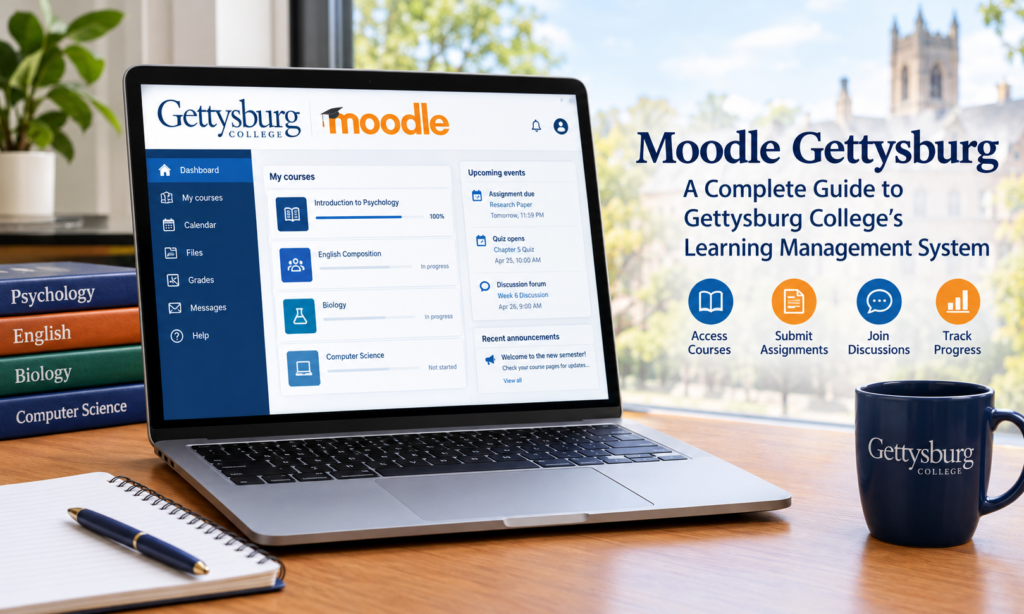

Moodle Gettysburg is a search term associated with Gettysburg College’s online learning environment, where students and instructors can access course materials, communicate about academic work, and manage learning activities. For students who are new to the college or unfamiliar with learning management systems, understanding how Moodle works can make everyday academic tasks easier.
This guide explains the purpose of Moodle Gettysburg, its typical features, how students can approach login and course access, what instructors may use it for, and how to troubleshoot common problems. It also covers account security, accessibility, and practical tips for getting the most out of an online course platform.
What Is Moodle Gettysburg?
Moodle Gettysburg refers to the Moodle learning management system used by Gettysburg College to support teaching and learning. Moodle provides a central online space where instructors can share academic resources, and students can participate in course-related activities.
Rather than replacing every aspect of classroom teaching, the platform extends learning beyond scheduled lectures. Students may use it to review reading materials, find assignment instructions, complete online quizzes, contribute to discussion forums, and access other resources made available by their instructors.
Gettysburg College’s Educational Technology office describes Moodle as a tool for extending the classroom beyond the physical campus. Its learning environment can support both traditional face-to-face courses and online academic activities.
Moodle Gettysburg is not a general-purpose website where anyone can freely enroll in college classes. Access depends on the college’s account arrangements, the user’s role, and the permissions assigned to particular courses.
How Does Moodle Gettysburg Work?
Moodle functions as a central location for digital course content and learning activities. Once an authorized user signs in, the available courses and resources depend on their college account and enrollment.
For a student, the typical process involves signing in, opening a course, reviewing its materials, and completing the instructor-assigned activities. Faculty members may use the same platform to organize course content, distribute files, communicate expectations, and assess student progress.
1. Centralized Course Materials
Instructors can organize course information so students don’t have to search multiple emails or unrelated websites for every document.
Depending on the course, materials may include:
- Syllabi and course schedules
- Lecture notes and presentation slides
- Assigned readings and reference documents
- Instructions for essays and projects
- Links to approved educational resources
- Recorded lectures or supplementary media
The availability of these materials varies by instructor. A course may contain extensive digital resources, while another may use Moodle primarily for announcements, assignments, and grades.
2. Assignments and Assessments
Moodle supports several types of academic assessment. Instructors can use assignment activities to collect student work and quizzes to test understanding of course material.
Students should carefully review each assignment’s instructions, submission requirements, and deadline. Some activities may require uploading a document, while others may involve answering questions directly in the platform.
The presence of an assignment in Moodle does not necessarily mean that every aspect of a course is managed online. Instructors may combine digital assessments with classroom presentations, written examinations, laboratory work, and other activities.
3. Discussion and Communication
Online discussions allow students to engage with course topics outside classroom meetings. Depending on how an instructor structures a course, Moodle may include discussion forums, announcements, and other communication tools.
These features can help students ask questions, respond to classmates, and revisit important information. They are especially useful when an assignment requires reflection or collaboration rather than a single individual submission.
4. Grades and Feedback
When instructors use Moodle’s assessment and gradebook features, students may be able to review marks and feedback within the relevant course.
However, the exact information displayed depends on instructor settings. Some grades may not appear until an assessment has been marked or released, and not every course uses Moodle to display all academic results.
Students should follow the college’s official procedures for questions about final grades, academic records, or grading disputes.
How to Log In to Moodle Gettysburg
Gettysburg College provides official instructions for accessing Moodle. Students, faculty, and staff generally authenticate through the college’s single sign-on system, with Duo as an additional authentication step.
Step 1: Open the official Moodle login page
Start from Gettysburg College’s official website or its Information Technology Moodle instructions. Using a college-provided entry point helps you avoid unofficial login pages.
Step 2: Enter your college credentials
Use your Gettysburg College username and password. Students and employees should use the credentials associated with their institutional accounts.
Step 3: Complete the authentication process
Follow the Duo authentication prompts and any additional sign-in instructions. If a credential or information-release consent screen appears, review it and follow the college’s official directions.
Step 4: Open your course
After signing in, look for your available courses. Select the relevant course to access its materials, activities, announcements, and other available features.
These steps reflect the college’s published login process. The appearance of the login page may change as the institution updates its systems.
What If You Are a Guest or External User?
Gettysburg College also provides a separate login route for certain non-Gettysburg users. Guests and other external participants should use the credentials supplied to them and follow the institution’s guest-login instructions.
A regular student account should not be assumed to work for every guest-access option, or vice versa. If you have been invited to participate in a particular course, ask the course organizer or college support team which access method applies to you.
Main Features of Moodle Gettysburg
Moodle’s value comes from bringing several teaching and learning functions into one environment. The features available to an individual student depend on the course and the instructor’s configuration.
Feature
How it helps
Course resources Keeps readings, notes, and learning materials organized
Assignments Provides instructions and, where configured, online submissions
Quizzes Supports online tests and knowledge checks
Discussion forums Encourage academic conversation and peer participation
Gradebook Can display assessment results and feedback
Announcements Shares course updates and important instructions
Multimedia resources May provide access to recorded lectures and learning videos
Group activities Supports collaborative tasks when enabled by instructors
Not every course will use every feature. Moodle is flexible, so instructors can choose activities that suit their subject, teaching style, and learning objectives.
Integration With Other Educational Tools
Gettysburg College also uses other educational technologies. For example, Panopto can be used to host and stream lecture videos through Moodle or another website.
This means Moodle may act as the main point of access for resources that are technically delivered through another service. Students should follow the links and instructions provided within their course rather than assuming that every resource is stored directly inside Moodle.
Benefits of Moodle Gettysburg for Students
A well-organized learning platform can make academic responsibilities easier to manage. Moodle offers several practical advantages when instructors use it consistently.
Convenient Access to Course Information
Students can return to posted readings, assignment instructions, and other course materials when they need to review them. This is especially helpful when preparing for exams or working on long-term projects.
The actual availability of materials depends on the instructor’s settings, so students should download or save permitted resources when appropriate.
Better Assignment Organization
Keeping course activities in one place helps students track what they need to complete. Checking course pages regularly makes it easier to notice newly posted tasks or changes to instructions.
Students should still maintain their own calendar or reminder system, especially when multiple courses have deadlines in the same week.
Opportunities for Independent Learning
Digital resources allow students to revisit difficult concepts at their own pace. Rereading notes, reviewing a recording, or joining a discussion can reinforce learning beyond the classroom.
These resources complement active study; they do not remove the need to attend required classes, complete readings, or communicate with instructors.
More Consistent Communication
When instructors regularly use Moodle announcements and course communication features, students have a central place to check for updates.
The benefits are greatest when students develop a routine of reviewing their course pages and checking their college email for messages that require attention.
How Faculty Members Use Moodle at Gettysburg
Moodle is not exclusively a student-facing tool. Faculty members can use it to plan and deliver course activities, organize digital resources, and assess student learning.
Course Design and Organization
Instructors can arrange materials by week, subject, unit, or assignment. A well-organized course helps students understand what to study and which activities to complete first.
Faculty members may also use course sections to distinguish required readings from supplementary materials.
Online Teaching and Assessment
Moodle supports digital discussions, quizzes, assignment submissions, and gradebook functions. Faculty can choose the combination of tools that best matches the learning goals of their courses.
For example, an instructor might share a reading before a class meeting, ask students to discuss a related question online, and then assess their understanding through a quiz or written assignment.
Supporting Learning Beyond Campus
When in-person teaching is disrupted, or students need access to resources outside scheduled classes, Moodle can support continued academic engagement.
Gettysburg College’s academic continuity guidance describes ways instructors can use the platform to distribute materials, communicate with students, deliver lectures, and assess learning.
Common Moodle Gettysburg Login Problems and Solutions
Login difficulties can stem from incorrect credentials, authentication issues, browser problems, or account permissions. The following troubleshooting steps can help identify the source of the problem.
Incorrect Username or Password
First, check that you are using your Gettysburg College account rather than credentials from another educational service.
Make sure the username is entered correctly and that your password has not been changed or expired. If you cannot recover access through the college’s approved process, contact its IT support team.
Duo Authentication Issues
If the login process stops during Duo verification, check whether you can receive or approve the required authentication request. Follow the institution’s instructions for handling an unavailable device or failed verification.
Do not share authentication codes or approve an unexpected login request to get into Moodle.
Moodle Opens, but Courses Are Missing
If you can sign in but cannot find a particular course, the issue may relate to enrollment, course availability, or the instructor’s settings.
Confirm that you are using the correct college account and check whether the course has been made available. If the problem continues, contact the instructor or the relevant college support team.
Pages Fail to Load
A temporary network problem or browser issue may prevent Moodle from loading correctly.
Try refreshing the page, checking your internet connection, updating your browser, or opening the platform in another supported browser. If the problem persists across devices, it may require technical assistance.
Assignment Submission Problems
If a submission fails, check the accepted file format, file size limits, assignment instructions, and whether the deadline has passed. Avoid assuming that a document has been submitted successfully just because it was selected for upload.
Look for a submission confirmation or status indicator. If a technical problem occurs close to a deadline, contact your instructor promptly and explain the issue.
Is Moodle Gettysburg Safe to Use?
Using the college’s official Moodle system is the appropriate way to access its digital learning environment. Gettysburg College’s published login instructions identify institutional single sign-on and Duo authentication as part of the process.
Students should nevertheless practice good account security.
- Access Moodle through official college pages or a trusted bookmark.
- Keep your college password private.
- Never share Duo verification codes or approve unfamiliar sign-in requests.
- Avoid entering credentials on unfamiliar websites that imitate a college login page.
- Sign out when using a shared computer.
- Keep your browser and operating system updated.
- Contact college IT support if you suspect unauthorized account access.
A legitimate login page should not be confused with third-party websites that use similar search terms. The phrase “Moodle Gettysburg” may appear in search results, but that alone does not establish that a website is officially affiliated with the college.
Accessibility and Mobile Access
Moodle is web-based, making it possible to access course information from compatible computers and mobile devices with an internet connection. The experience can vary depending on the device, browser, course design, and activity type.
Students who use screen readers, keyboard navigation, captions, or other accessibility tools should check whether the specific course materials support their needs. Accessibility depends on how instructors create documents, presentations, videos, and other content, not just on the platform itself.
For lengthy assignments or complex quizzes, a laptop or desktop computer may be more convenient than a phone. Students should also confirm that uploaded work displays correctly and that all required files are included before submitting an assignment.
If an accessibility barrier prevents you from participating in a course activity, contact the appropriate college office or instructor to discuss available support and accommodations.
Tips for Using Moodle Gettysburg Effectively
Students can make the platform more useful by developing a few consistent habits.
- Check Moodle regularly. Review course pages and announcements to stay informed about new materials and changes.
- Read instructions carefully. Check assignment requirements, deadlines, file formats, and submission details before starting your work.
- Organize course materials. Keep downloaded readings and assignment drafts in clearly named folders.
- Use a separate deadline calendar—record important due dates so that several courses do not become difficult to manage.
- Confirm submissions. Check the submission status after uploading an assignment or completing an online activity.
- Ask questions early. Contact your instructor or technical support when course access or assignment instructions are unclear.
- Protect your account. Use secure devices and follow the college’s authentication requirements.
These practices help regardless of the subject. The platform provides access to learning activities, but students remain responsible for staying organized and communicating consistently.
Conclusion
Moodle Gettysburg is the online learning environment associated with Gettysburg College, designed to extend classroom learning through digital course materials, assignments, discussions, quizzes, and other educational activities. It provides students and instructors with a shared space to organize academic work and support communication.
Access generally requires a valid college account and the institution’s authentication process, including Duo. External users may have separate login arrangements, while available course materials and features depend on individual enrollment and instructor settings.
For students, the best approach is to use the official college login page, check course updates regularly, monitor assignment deadlines, and contact college support if access problems arise. Understanding these basics can make Moodle a more reliable part of the college learning experience.
May you also read: Girl Dad Shirt
Frequently Asked Questions
1. What is Moodle Gettysburg?
Moodle Gettysburg is the learning management system Gettysburg College uses to support digital learning, distribute course materials, manage assignments, and facilitate communication between instructors and students.
2. How do I log in to Moodle Gettysburg?
Go to the official Moodle login page on Gettysburg College’s website. Enter your college username and password, complete the required Duo authentication, and follow any additional prompts.
3. Can I access Moodle Gettysburg from my phone?
Yes, you can generally access Moodle through a compatible mobile browser. Some activities, such as lengthy written assignments, may be easier to complete on a computer.
4. Why can I log in but not see my course?
Possible reasons include incomplete enrollment, a course that isn’t available yet, or using the wrong account. Check with your instructor or college support team if the course remains unavailable.
5. Does Moodle Gettysburg support online assignments and quizzes?
Yes. Moodle supports assignment submissions and online quizzes, along with other learning activities. Whether a particular feature is available depends on how the instructor has configured the course.
6. What should I do if my Moodle Gettysburg login fails?
Check your username and password, verify your Duo authentication, and try basic browser troubleshooting. If the issue continues, contact Gettysburg College IT support for assistance.
7. Is Moodle Gettysburg available to people outside the college?
Some guests and external users may receive access through a separate login process. Access is not automatically available to everyone, and external users should obtain the appropriate credentials from their college contact.



Pingback: Floral Mother of the Bride Dresses: 15 Elegant Ideas