

White pearl is one of the most timeless and admired gemstones in the world. Known for its soft glow, elegant appearance, and natural beauty, it has remained a popular jewelry choice for centuries. From classic pearl necklaces to modern earrings, rings, bracelets, and decorative accessories, white pearls continue to attract people who appreciate simplicity and sophistication.
However, white pearls are more than beautiful pieces of jewelry. They have an interesting natural formation process, different varieties, unique characteristics, and cultural significance. Their value can also vary considerably depending on their size, shape, color, luster, surface quality, and origin.
Whether you want to buy a white pearl, learn its meaning, understand its value, or learn how to care for pearl jewelry, knowing the basics can make the experience more rewarding.
This guide covers everything you need to know about white pearls, including their formation, major types, characteristics, symbolism, jewelry applications, pricing factors, and buying considerations.
What Is a White Pearl?
A white pearl is an organic gemstone produced inside certain mollusks, including oysters and freshwater mussels. Unlike traditional gemstones that are extracted from rocks, pearls develop inside living organisms through a natural biological process.
Their familiar white or creamy appearance makes them especially popular in fine jewelry. Some white pearls have a pure white body color, while others show subtle secondary shades such as pink, silver, green, or cream.
These additional colors are known as overtones. They can create different visual effects depending on the pearl’s structure and the way light interacts with its surface.
White pearls are available in both natural and cultured varieties.
- Natural white pearls: Develop without deliberate human intervention to initiate pearl formation.
- Cultured white pearls: Grow inside mollusks after humans introduce material that triggers pearl development.
Most pearls sold in modern jewelry markets are cultured rather than natural.
White pearls are commonly associated with Elegance, traditional jewelry, weddings, formal occasions, and sophisticated everyday fashion.
How Are White Pearls Formed?
Pearl formation is a fascinating natural process that takes place inside a mollusk.
When certain material enters the soft tissue of a pearl-producing mollusk, the animal may respond by depositing layers of nacre around it. Nacre is a substance made primarily of microscopic calcium carbonate crystals held together by organic material.
Over time, these layers gradually develop into a pearl.
The process can take months or years, depending on the species, cultivation conditions, and type of pearl being produced.
Natural Pearl Formation
Natural pearls develop without humans deliberately introducing a nucleus or tissue to initiate their formation.
They are relatively rare because the necessary biological conditions do not occur frequently. Finding a naturally formed pearl with attractive color, shape, and luster can be particularly difficult.
This Rarity can make natural pearls highly valuable.
Cultured Pearl Formation
Cultured pearls develop through human-assisted cultivation.
Pearl farmers carefully introduce a nucleus, mantle tissue, or both into a suitable mollusk. The animal then produces nacre through its natural biological processes.
Cultured pearls are genuine pearls. The difference is that their formation begins with human assistance rather than occurring entirely without intervention.
Cultured pearl farming has made beautiful white pearls more accessible to jewelry buyers worldwide.
Different Types of White Pearls
Not every white pearl looks or behaves the same way. Different mollusk species and growing environments produce pearls with distinct characteristics.
The four major cultured pearl categories are freshwater, Akoya, South Sea, and Tahitian. However, Tahitian pearls are generally known for their dark colors rather than traditional white shades.
The following varieties are particularly relevant when shopping for white pearl jewelry.
1. White Freshwater Pearls
White freshwater pearls are commonly cultivated in freshwater mussels found in lakes, rivers, and ponds.
They are popular because they offer a wide range of shapes, sizes, and price points.
Their characteristics include:
- White, cream, and sometimes pinkish tones.
- Round, oval, button, and irregular shapes.
- Different levels of surface shine.
- Broad availability.
- Generally more affordable than premium saltwater varieties.
Freshwater pearls are an excellent option for people looking for attractive pearl jewelry without spending a substantial amount.
2. White Akoya Pearls
Akoya pearls are among the most recognizable white pearls in traditional jewelry.
They are saltwater cultured pearls, primarily produced in Japan, China, and Vietnam.
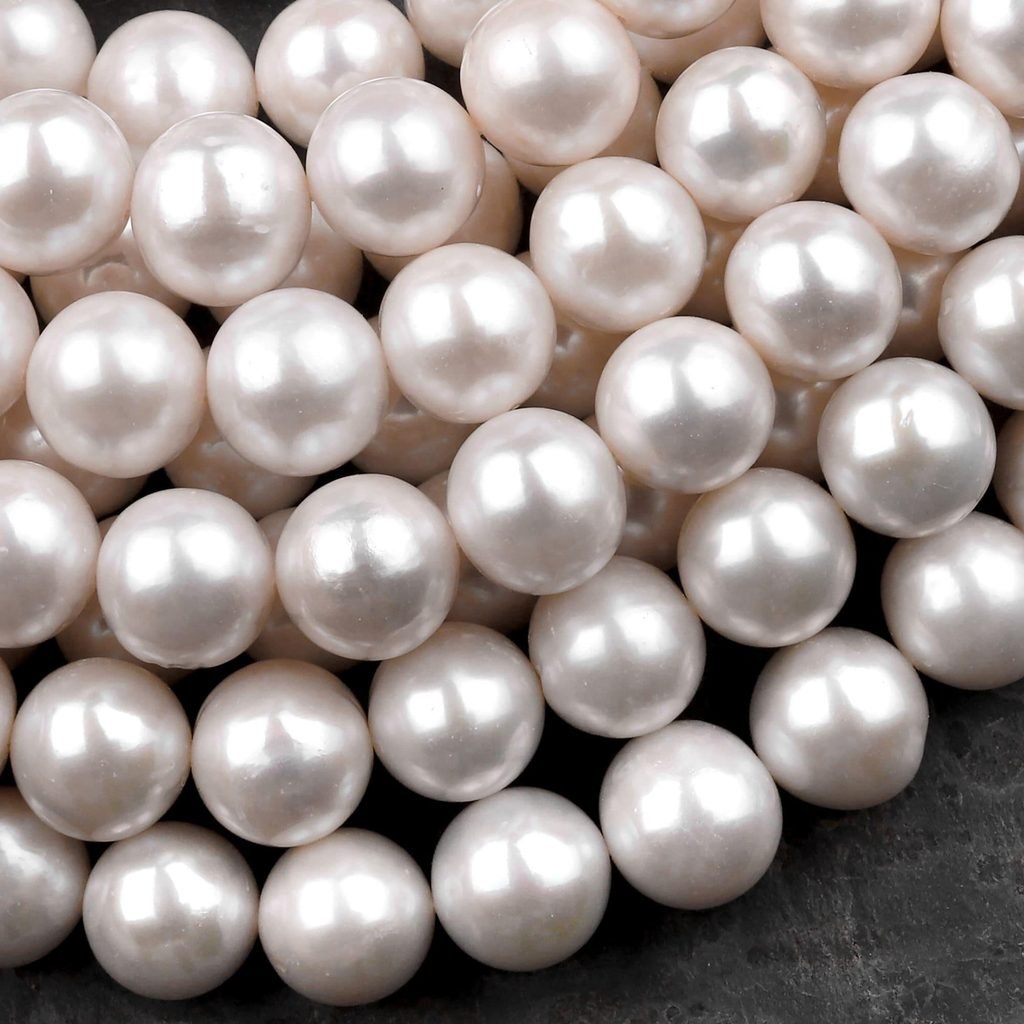
Akoya pearls are particularly admired for their round shapes and bright, reflective luster. Their polished appearance makes them popular for traditional necklaces, earrings, and elegant jewelry sets.
Important characteristics include:
- Classic white and cream body colors.
- Pink or green overtones in some examples.
- Bright, mirror-like luster.
- Generally round or near-round shapes.
- Strong popularity in traditional fine jewelry.
High-quality Akoya pearls can be considerably more expensive than ordinary freshwater pearls.
3. White South Sea Pearls
White South Sea pearls are among the most prestigious cultured pearls available.
They are produced by the silver-lipped Variety of the Pinctada maxima oyster, primarily in Australia, Indonesia, and the Philippines.
Their larger sizes and soft, luxurious appearance make them particularly desirable.
Common characteristics include:
- White, silver, and light cream shades.
- Large pearl sizes.
- Soft, satin-like luster.
- Thick nacre.
- High demand in luxury jewelry.
Because of their growing conditions and relatively limited production, high-quality white South Sea pearls can command premium prices.
4. White and Cream Pearl Variations
White pearls are not limited to a single shade.
Some appear bright white, while others have warmer ivory or creamy tones. Certain pearls also show subtle pink, silver, or green overtones.
These differences can influence how a pearl looks under natural and artificial lighting.
The best shade ultimately depends on personal preference and the jewelry design.
White Pearl Meaning and Symbolism
White pearls have carried symbolic meaning across different cultures and historical periods.
Their soft appearance, natural formation, and association with traditional jewelry have helped establish several common interpretations.
Purity and Innocence
White pearls are frequently associated with purity, innocence, and simplicity.
Their light color has made them particularly popular in bridal jewelry and wedding accessories.
Wisdom and Maturity
Pearls are also commonly associated with wisdom, experience, and personal development.
Their gradual formation inside living organisms is sometimes used to symbolize patience and growth.
Elegance and Sophistication
White pearl jewelry has long been connected with refined fashion.
A simple pearl necklace or pair of earrings can complement both formal and everyday clothing without appearing overly decorative.
Peace and Calmness
In some cultural and contemporary interpretations, white pearls symbolize peace, balance, and emotional calmness.
These associations reflect tradition and personal belief rather than scientifically established properties.
White Pearl Benefits and Uses
White pearls offer several practical and aesthetic benefits, especially in jewelry.
1. Timeless Fashion Appeal
One of the biggest advantages of white pearl jewelry is its ability to remain fashionable across changing trends.
A simple necklace can work with traditional clothing, formal dresses, business outfits, and contemporary fashion.
2. Versatile Jewelry Options
White pearls can be incorporated into different types of accessories, including:
- Necklaces and pendants.
- Earrings and studs.
- Bracelets.
- Rings.
- Brooches.
- Bridal jewelry.
- Luxury jewelry sets.
Their neutral appearance makes them relatively easy to coordinate with other colors and materials.
3. Suitable for Different Occasions
White pearl jewelry is popular for weddings, anniversaries, birthdays, celebrations, professional events, and formal gatherings.
Smaller pearl earrings also work well for everyday wear.
4. Meaningful Gifts
People often choose pearls as gifts because of their traditional associations with Elegance, affection, and lasting relationships.
They make thoughtful gifts for birthdays, weddings, anniversaries, and other special occasions.
5. Potential Collectible Value
Certain high-quality pearls can be valuable additions to a jewelry collection.
However, their financial value depends on several measurable characteristics, market demand, Rarity, and authenticity.
Don’t assume every white pearl will increase in value over time.
What Determines the Value of a White Pearl?
The value of a white pearl is determined by multiple characteristics rather than its color alone.
The Gemological Institute of America (GIA) identifies seven important pearl value factors: size, shape, color, luster, surface, nacre, and matching.
GIA News+1
1. Size
Pearl size is measured in millimeters.
Larger pearls are generally more valuable when other quality characteristics are comparable. However, size alone does not guarantee a high price.
2. Shape
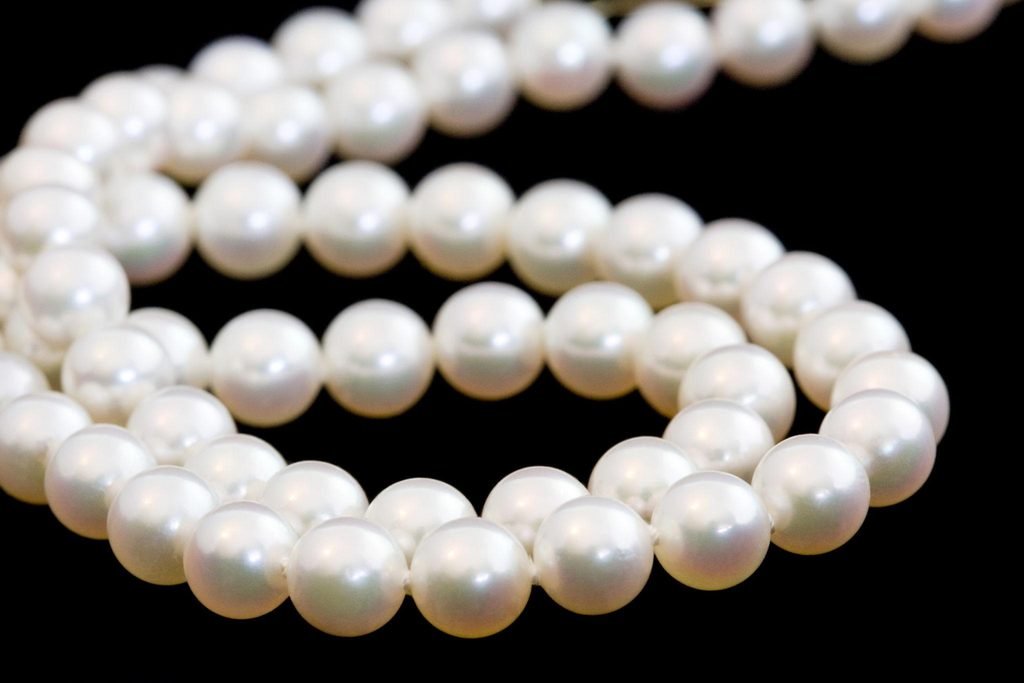
Round pearls are traditionally among the most desirable because of their symmetry.
Other shapes include:
- Oval.
- Button.
- Drop.
- Pear.
- Semi-baroque.
- Baroque.
Irregular pearls can also be attractive, particularly in contemporary jewelry designs.
3. Color
White pearls can have different bodycolors and overtones.
Common options include bright white, cream, ivory, and silver shades.
Some buyers prefer pearls with subtle pink or green overtones because they create additional visual depth.
4. Luster
Luster refers to the quality and intensity of light reflected from a pearl’s surface.
High-quality pearls generally display sharper reflections and a stronger glow.
This is one of the most important characteristics to examine before purchasing.
5. Surface Quality
A pearl’s surface may contain small spots, bumps, wrinkles, or other natural characteristics.
Pearls with cleaner and smoother surfaces are generally more desirable, although minor imperfections are common.
6. Nacre Quality
Nacre is the material that forms the pearl.
Its quality and thickness influence the pearl’s appearance and durability.
Well-formed nacre can contribute to attractive luster and long-term wear.
7. Matching
Matching is especially important when buying pearl necklaces, bracelets, or earrings.
Pearl jewelry that closely matches in size, color, shape, and luster generally looks more balanced.
How Much Does a White Pearl Cost?
There is no single price for a white pearl because the market includes different varieties, qualities, sizes, and origins.
A simple freshwater pearl necklace may be relatively affordable, while a high-quality Akoya or South Sea pearl necklace can cost considerably more.
The following general comparison explains how different varieties are positioned in the jewelry market.
Pearl type
General price position
Main appeal
Freshwater Generally affordable Variety and accessibility
Akoya Mid-range to premium Bright luster and round shape
South Sea Premium to luxury Large size and thick nacre
Natural white pearl Highly variable, often expensive Rarity and natural formation
Actual prices depend on individual quality, seller reputation, treatments, certification, and market conditions.
Are Expensive White Pearls Always Better?
Not necessarily.
A higher price does not automatically mean that a pearl is the right choice.
A smaller freshwater pearl with excellent luster may look more attractive to a particular buyer than a larger pearl with poor surface quality.
Compare the full set of characteristics rather than focusing only on price.
How to Choose the Best White Pearl
Buying white pearl jewelry requires attention to several details.
Whether you’re buying a necklace, ring, bracelet, or pair of earrings, these considerations can help.
Choose the Right Pearl Type
First, decide which Variety matches your budget and expectations.
Freshwater pearls suit accessible everyday jewelry, while Akoya pearls are popular for classic necklaces. South Sea pearls are especially appealing to buyers looking for luxury jewelry.
Examine the Luster
View the pearl in natural light.
A quality pearl should have an attractive surface glow and reasonably clear reflections.
Avoid pearls that look excessively dull or chalky unless the appearance is intentional.
Check the Surface
Examine the pearl closely for visible scratches, large spots, cracks, or other imperfections.
Some minor natural features are normal, but extensive surface damage can affect appearance and durability.
Consider the Shape
Round pearls are traditional, but other shapes can create distinctive jewelry designs.
Choose a shape that complements the intended accessory and personal style.
Ask About Treatments
Some pearls may undergo treatments to change or improve their appearance.
Ask the seller whether the pearls have been bleached, dyed, polished, or otherwise treated.
Reliable disclosure helps buyers understand what they are purchasing.
Request Independent Identification
For expensive pearl purchases, consider obtaining an independent gemological report.
A GIA Pearl Report can help establish whether a pearl is natural or cultured, its freshwater or saltwater environment, and other relevant characteristics depending on the report type.
This is especially useful when purchasing expensive or potentially rare pearls.
White Pearl Jewelry: Popular Styles and Designs
White pearls work with numerous jewelry designs, making them suitable for traditional and contemporary fashion.
White Pearl Necklaces
A white pearl necklace is one of the most recognizable forms of pearl jewelry.
Single-strand necklaces are classic choices, while layered designs offer a more modern appearance.
White Pearl Earrings
Pearl stud earrings are particularly popular because of their simplicity.
Drop earrings and pearl hoops provide additional styling options for formal events.
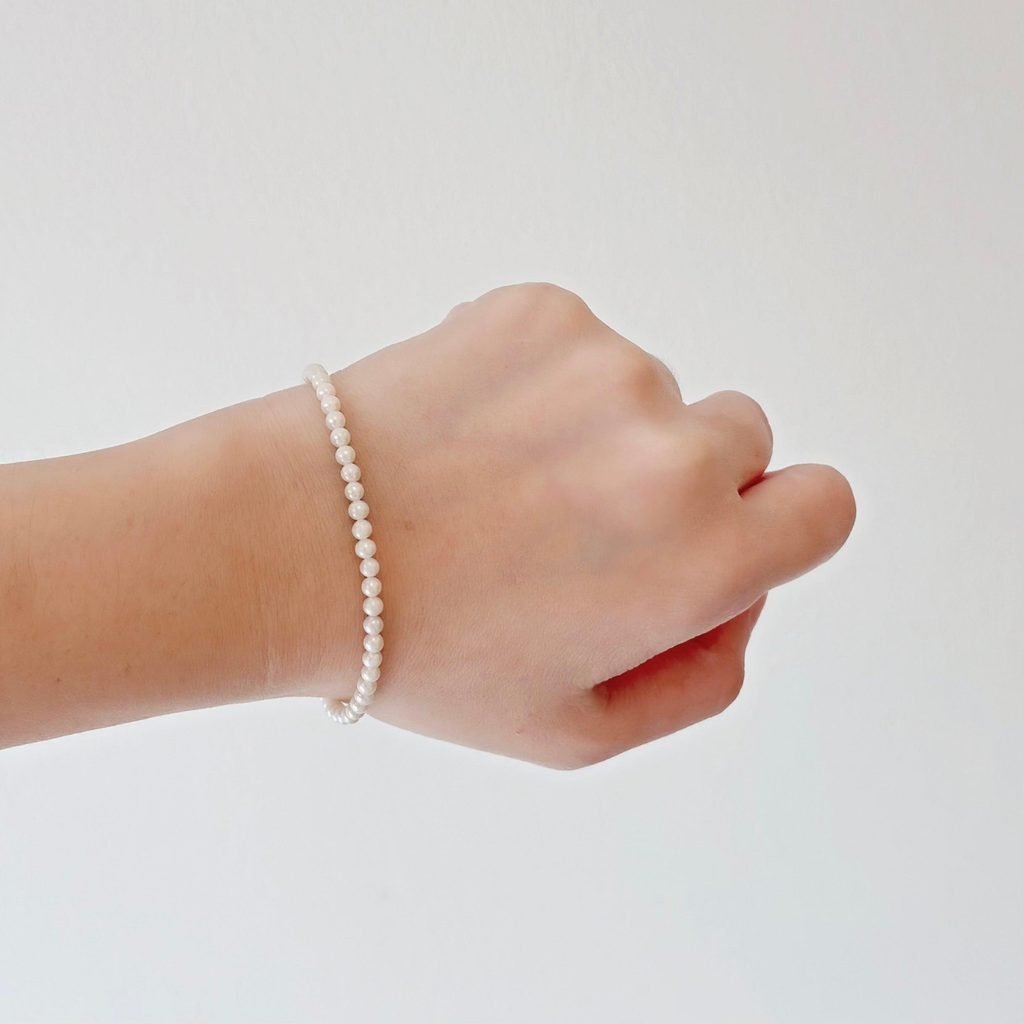
White Pearl Bracelets
Pearl bracelets combine Elegance with versatility.
Depending on the design, you can wear them individually or alongside other bracelets.
White Pearl Rings
White pearl rings are often set in gold, silver, platinum, or diamonds.
Because pearls are softer than many traditional gemstones, they require extra care in rings.
How to Clean and Care for White Pearls
White pearls require gentle handling to maintain their appearance.
Unlike many mineral gemstones, pearls are relatively soft and can be damaged by scratches, chemicals, and unsuitable cleaning methods.
Follow these care recommendations:
- Gently wipe pearls with a soft, clean cloth after wearing them.
- Avoid direct contact with perfumes, hairsprays, and cosmetics.
- Do not use harsh detergents or chemical jewelry cleaners.
- Keep pearls away from abrasive surfaces.
- Store them separately from harder gemstones and metal jewelry.
- Avoid prolonged exposure to excessive heat.
- Have pearl necklaces professionally inspected when the strings wear out.
Do not clean pearls with aggressive polishing methods.
Proper storage and gentle cleaning can help preserve their natural appearance for many years.
White Pearl vs. Other Pearl Colors
White is one of the most traditional pearl colors, but it isn’t the only option.
Different pearl colors create different visual effects and styling opportunities.
Pearl color
Appearance
Popular association
White Soft and classic Elegance
Cream Warm and subtle Traditional style
Pink Delicate and feminine Romance
Golden Rich and warm Luxury
Black Dark and dramatic Contemporary fashion
Silver Cool and reflective Modern sophistication
The best color depends on personal preference, skin-tone styling choices, jewelry design, and the occasion.
White pearls remain particularly popular because they coordinate easily with a wide range of clothing styles.
Are White Pearls Real Gemstones?
Yes. Pearls are recognized as organic gemstones.
Unlike diamonds, rubies, and sapphires, which are mineral gemstones, pearls are created by living mollusks.
Their organic origin gives them a different composition, formation process, and care requirements.
Both natural and cultured pearls are genuine pearls, although their origins and market values can differ significantly.
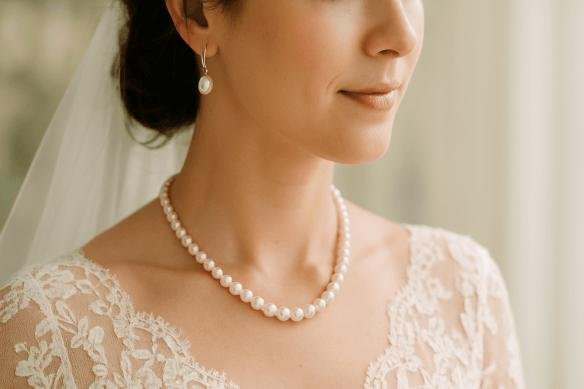
White Pearls in Weddings and Special Occasions
White pearls have a long association with bridal fashion.
Their soft appearance complements traditional wedding dresses, formal gowns, and elegant accessories.
Brides may choose pearl earrings, necklaces, bracelets, or complete jewelry sets.
They are also popular gifts for wedding anniversaries and other meaningful celebrations.
The neutral color makes them relatively easy to coordinate with white, ivory, champagne, and pastel-colored outfits.
Beyond weddings, you can wear white pearl jewelry to professional events, dinner parties, celebrations, and formal gatherings.
Are White Pearls a Good Investment?
White pearls can be valuable collectibles, but they shouldn’t automatically be considered financial investments.
Their market value depends on Rarity, pearl type, quality, origin, documentation, and buyer demand.
Exceptional natural pearls can be particularly rare. High-quality South Sea and Akoya cultured pearls can also command premium prices.
However, resale values may be significantly different from retail prices.
Anyone buying pearls primarily for financial reasons should seek independent professional advice and avoid unsupported investment promises.
Conclusion
White pearl remains one of the most recognizable and timeless choices in the world of fine jewelry. Its natural formation, elegant appearance, different varieties, and cultural symbolism make it appealing to both traditional jewelry lovers and modern fashion enthusiasts.
From affordable freshwater pearls to luxurious Akoya and South Sea varieties, there’s an option for every preference and budget. Understanding characteristics such as size, shape, luster, surface quality, nacre, and matching can help buyers make more informed decisions.
Whether selected for a wedding, gifted to someone special, or added to a personal jewelry collection, a white pearl offers natural beauty and classic style. With appropriate care and attention to quality, pearl jewelry can remain an attractive part of a collection for many years.
May you also like: Kathleen Cain
Frequently Asked Questions (FAQs)
1. What is a white pearl?
A white pearl is an organic gemstone formed inside certain mollusks. It can develop naturally or through human-assisted cultivation and is widely used in necklaces, earrings, bracelets, and other jewelry.
2. What does a white pearl symbolize?
White pearls are commonly associated with purity, Elegance, wisdom, peace, and sophistication. These meanings vary across cultures and personal traditions.
3. Are white pearls natural or cultured?
White pearls can be either natural or cultured. Natural pearls form without deliberate human intervention, while cultured pearls develop after humans initiate the formation process inside a mollusk.
4. Which white pearl is the most valuable?
High-quality natural white pearls can be extremely valuable because they are rare. Among cultured varieties, exceptional South Sea and Akoya pearls can also command premium prices.
5. How can you tell if a white pearl is real?
A qualified gemologist can identify a pearl using professional examination and testing. For expensive purchases, an independent gemological report can help establish whether the pearl is natural or cultured.
6. Can white pearls be worn every day?
Yes, you can wear white pearl jewelry regularly with proper care. However, protect pearls from chemicals, scratches, excessive heat, and rough handling.
7. How should white pearls be cleaned?
Gently wipe white pearls with a soft, clean cloth after wearing them. Avoid harsh chemicals, abrasive cleaners, and ultrasonic cleaning devices.



Pingback: What Hair Type Do I Have? Easy Guide to Find Your Hair Type